Throughout March, Anti-Slavery International has been publishing a blog series authored by experts who consulted on the joint Middlesex University and Anti-Trafficking Monitoring Group training framework designed to strengthen Local Authorities’ response to modern slavery. In the last blog from the series, we hear perspectives from Kim.
Kimberley is a leading consultant and policy specialist with extensive expertise in modern slavery, exploitation, and trauma-informed practice. Her work with the Anti-Trafficking Monitoring Group (ATMG) and Anti-Slavery International marked the beginning of a four-year period in which she received comprehensive training across UK and international policy, building on her scientific analysis skills to become highly effective in research and policy development. Kimberley’s areas of expertise include ethical lived experience co-production and engagement; modern slavery, human trafficking and exploitation; policy and strategy development; gang criminology; gender-based violence; child exploitation; sex work and prostitution; and life-long multiple disadvantage.
Content warning: loss of life. Reader discretion advised.
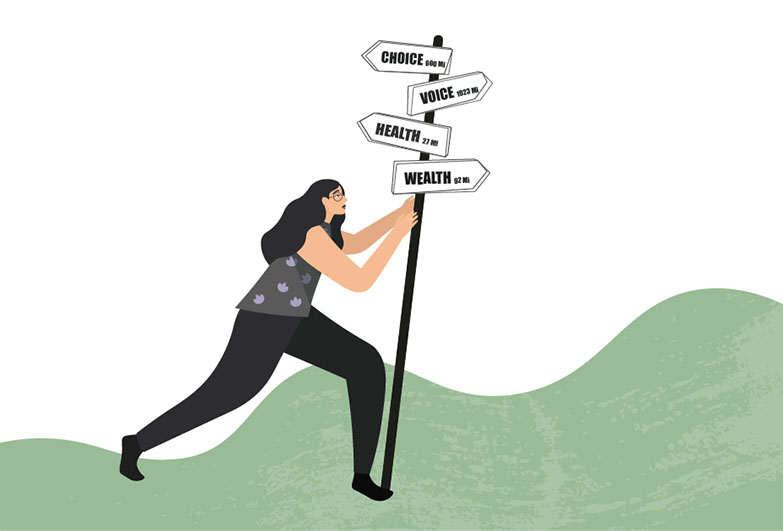
“If authorities themselves fail to understand modern slavery and human trafficking, then how can any adult realistically provide informed consent to enter the National Referral Mechanism? Informed consent requires understanding, stability and trust, all of which are undermined by systemic confusion.”
- Kimberley Hutchinson
In this last blog from the series, this week we hear from Kim, who explores the importance of consent, adequate safeguarding in a rapidly changing landscape, and the sometimes-conflicting approaches that different agencies and first responders take to address modern slavery and human trafficking.
The challenges Local Authorities face in responding to modern slavery
The type of support a victim or survivor receives is fundamentally shaped by how they are identified. That identification process is often influenced by professionals’ bias, and deeply embedded stereotypes about who a “real” victim of modern slavery and human trafficking (MSHT) looks like.
These assumptions are further distorted by politically driven narratives in parts of the media, where misinformation about MSHT spreads quickly and shapes both public and professional opinion. When identification is flawed, access to protection, safeguarding, and justice becomes inconsistent, unequal and for many, unobtainable.
Another significant challenge lies in conflicting or contradictory approaches taken by different agencies and designated first responders. In practice, these do not always align with actual government guidance. For example, the College of Policing states:
“Victims of MSHT are exploited using grooming tactics, force, coercion, control, deception, threats or other intimidating behaviour…
Children and vulnerable adults can still be victims of MSHT even if these forms of exploitation are not used, as their vulnerability can be exploited without the use of other tactics. The main types of MSHT… are:
– slavery, servitude and forced or compulsory labour
– sexual exploitation
– criminal exploitation
– organ removal.”
While this appears comprehensive, it risks increasing confusion around the legal framework for children. Under both international and domestic law, A child is a victim of trafficking if they are recruited, transported, transferred, harboured or received for the purpose of exploitation, regardless of whether coercion, deception, or “grooming” can be evidenced. Framing exploitation primarily through the methods used to exploit them means that first responders might misidentify victims, and it creates higher evidence thresholds to be able to identify them.
Furthermore, many local authorities have established specialist child exploitation teams, but these teams often only focus on child sexual exploitation and child criminal exploitation. But children are also victims of domestic servitude, labour exploitation, forced marriages, and other forms of modern slavery. These gaps mean that many children remain at risk of additional harm.
Adding to this, the guidance on safeguarding for trafficked children issued by the Department for Education and the Home Office in 2011 is now significantly outdated, and it predates the Modern Slavery Act 2015. This creates inconsistencies in practice and leaves frontline professionals relying on fragmented interpretations.
Other challenges arise when children turn 18 and transition to adulthood. Policies to identify and safeguard child survivors do not align with those for adults; this leaves young people approaching adulthood facing a cliff edge in support.
If authorities themselves fail to understand MSHT, then how can any adult realistically provide informed consent to enter the National Referral Mechanism (NRM)? Informed consent requires understanding, stability and trust, all of which, are undermined by systemic confusion.
Ultimately, when identification is shaped by bias, misinformation, and inconsistent statutory interpretation, survivors pay the price. Accurate, rights-based identification must be the foundation of effective protection.
The importance of training
As the United Nations Sustainable Development Goals state, leave no one behind. To ensure that this becomes a reality, training is critical.
Consistent, up-to-date and properly regulated training is vital. I cannot think of another moment, in the past decade, when this has felt more urgent. The current political and media discourse around modern slavery, and human trafficking is volatile, emotive and increasingly polarised.
At the same time, many policy changes are being implemented across government departments and filtered down from national to local authorities, in many cases, before the relevant changes have even passed through Parliament. That should concern us all.
When frontline professionals are expected to operate within a shifting landscape of guidance, policy statements and political messaging, without clear and consistent legal training, the consequences are predictable: confusion, inconsistency and harm. Safeguarding cannot function effectively in an environment where the rules appear to change overnight or are interpreted through ideological lenses rather than statutory frameworks.
Particularly alarming is the growing narrative that appears to endorse a two-tiered approach to identifying and supporting British nationals versus migrants, fuelled by misleading media rhetoric. This impacts professionals’ confidence and decision-making, even though no changes have been made (yet!) to the Modern Slavery Victim Care Contract, which provides support for survivors. Misinformation leads to subtle shifts in identification thresholds, hardening of credibility assessments, and narrowing of support pathways. The same rhetoric also feeds into the very systemic inequalities that contribute to child exploitation and street gang culture. That is, they fuel racial, gender and sex discrimination, and invite unconscious bias in the identification of victims and risk victim criminalisation.
I do not speak about this lightly; I know survivors who have lost their lives. I know children who have lost parents, not only to exploitation, but to systemic failures that deepened trauma rather than eased it. Then their orphaned children are told that their parents were not just complicit in their own abuse but even in their own death.
Without listening to subject-matter experts, without rigorous evidence-checking, and without consistent, human-rights-based, legally informed training, those in positions of responsibility are not safeguarding, they are gambling. When systems fail, the cost is irreversible. Training is not a bureaucratic exercise; it is a protective mechanism. It ensures that law is applied as intended, that bias is challenged, and that survivors are identified and supported based on rights, not rhetoric. In the current climate, anything less is dangerous.
Looking ahead
Frontline practitioners play a pivotal role in identifying and supporting victims and survivors. But the reality is that many of these dedicated individuals find themselves lost amidst a labyrinth of conflicting UK systems, cross-government policies, and complex frameworks. The result is a fog of bureaucracy that can distract from what truly matters: prioritising the needs and rights of victims and survivors.
It is essential, therefore, to direct those in frontline or practitioner roles towards human rights instruments. While practitioners may not always know how to navigate every conflicting policy or framework, human rights instruments provide a clear legal foundation. These tools ensure that, at the very least, practitioners understand what victims and survivors are legally entitled to, regardless of the confusing government processes, and are empowered to tailor their support accordingly.
By grounding frontline work in human rights, we also have the opportunity to bring a vital shift in perspective, one that consciously moves away from the influence of racially biased, discriminatory, and bureaucratic policies. Too often, decisions and support are shaped by subtle, systemic prejudices and red tape, rather than the actual needs of those seeking help. Human rights instruments offer a universal standard, cutting through unnecessary complication and combating the insidious effects of discrimination. This clarity firmly places the emphasis on compassionate, effective assistance and advocacy.
Ultimately, integrating human rights instruments into frontline practice is not just a matter of legal compliance, it represents a commitment to justice, fairness, and dignity for all. By making these instruments accessible and central to daily work, we encourage a culture where victim and survivor support needs are understood, prioritised, and met, free from the distortions of bias and bureaucracy. This approach fosters trust, empowers practitioners, and, most importantly, transforms lives for the better.