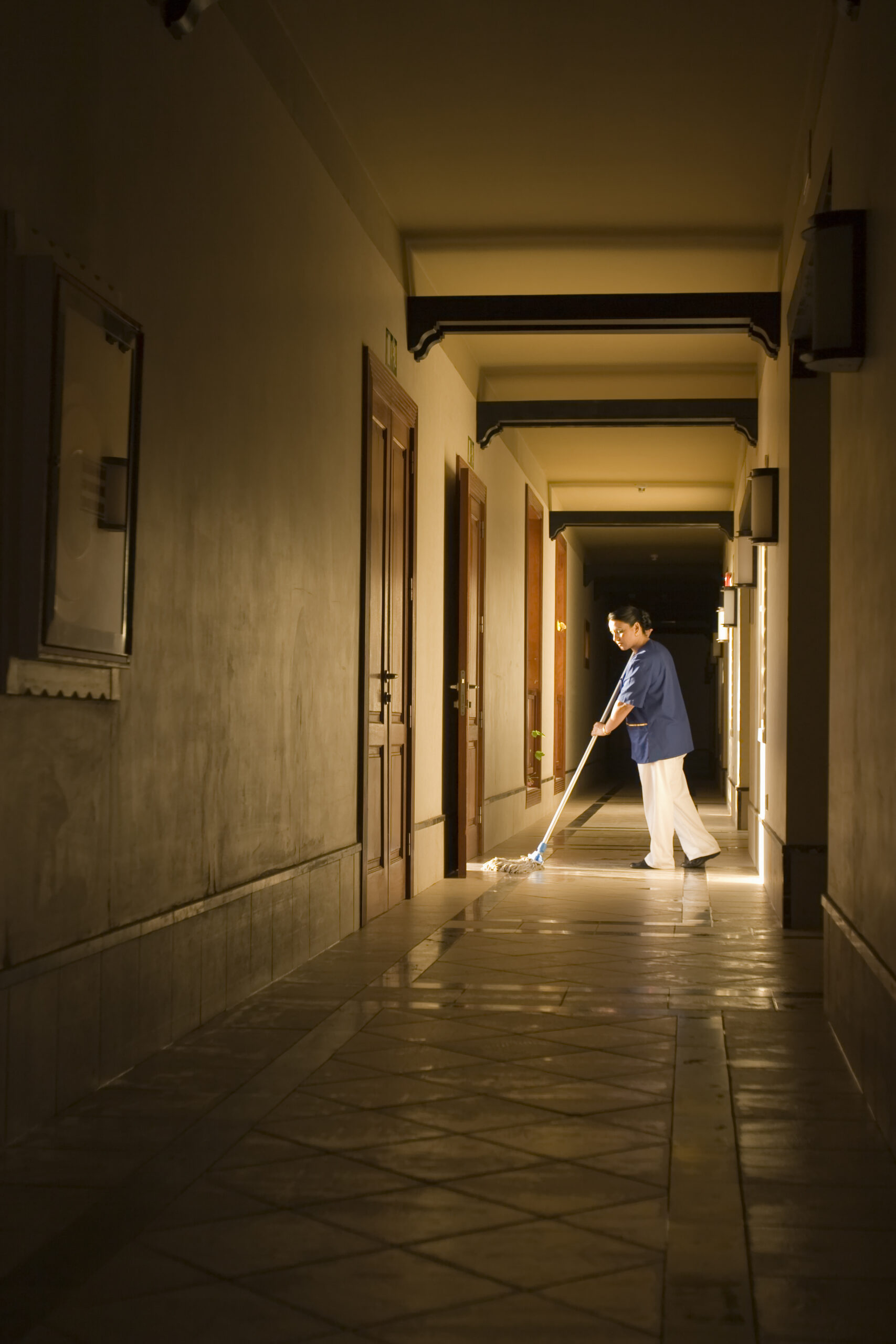
During Women’s History Month, we recognise women and girls’ crucial contributions to equality and freedom, but we also acknowledge the work that remains to be done to achieve gender equality across the world.
Modern slavery can impact anyone, but gender inequality and discrimination can increase women and girls’ vulnerability to exploitation. So, this March, we are highlighting the abuses and risks many women face in undertaking domestic work, which are too often overlooked, with a specific focus on their experiences under the sponsorship system known as Kafala.
To truly tackle the root causes of modern slavery, we must understand the particular risks that women and girls face.
What is the Kafala system?
The Kafala system is a set of laws, regulations and policies used in some countries, such as Kuwait, Bahrain, and Qatar, that tie migrant workers directly to their employers. Under this visa sponsorship system, migrant workers face many restrictions. They cannot, in many cases, change jobs or even leave the country without their employers’ permission, otherwise risking detention and deportation.
Employers can also make up instances of ‘unexplained absences’ from work as a reason for termination of employment, commonly referred to as ‘absconding’ charges. This imbalance of power restricts workers’ ability to report abuses and seek justice. Because their legal status depends on their employer, migrant workers who experience exploitation may fear retaliation, including job loss and deportation, which may prevent them from leaving abusive situations. As a result, migrant workers often end up trapped in exploitative and abusive conditions that may amount to situations of forced labour or debt bondage.
Abuses migrant domestic workers face
Migrant domestic workers (MDWs) make up 18% of the workforce in GCC states and play an important role within these societies. MDWs allow for fewer caring and domestic responsibilities within the family, increasing capacity for work and leisure.
Women are particularly vulnerable to exploitation under the Kafala system through their employment as MDWs. Domestic work makes up a significant proportion of the female workforce in GCC states, with 32.4% of the female workforce employed in domestic work. These workers are frequently excluded from labour protections granted to other migrant workers.
MDWs are often denied fundamental labour rights, such as regulated working hours and days off. Reports from former MDWs expose instances of seven-day work weeks, passport confiscation, and no private rooms.
As a result of limited protections, migrant domestic workers may face wage theft, passport confiscation, false promises in recruitment and extortionate recruitment fees. These fees can contribute to debt bondage, as MDWs’ earnings are rarely enough to repay recruiters. These violations are consistent with indicators of forced labour, which may signal situations of modern slavery.
MDWs also face high risks of exploitation because they work inside private homes, where labour inspections require the employer’s consent, and so are difficult to carry out. Many MDWs live in their employer’s household and may be unable to leave without permission. This increases their isolation and restricts their freedom and ability to seek help. These conditions also allow abusive employers to go unpunished and continue cycles of abuse and exploitation, including physical and sexual abuse at the hands of their employers or members of the household.
Impacts of Ramadan
As Ramadan 2026 ends, we reflect on how this holiday impacts MDWs, as it can be a particularly difficult time. Their work is fundamental for Ramadan’s festivities, rising early before dawn and working late into the evenings providing care, cleaning, and cooking. This increased workload often occurs while many MDWs also fast, either because of faith or as enforced by their employers.
During the Ramadan period, we often see a spike in ‘absconding’ cases filed by employers, alleging MDWs are running away, as a retaliation to complaints by MDWs of the increasingly strenuous and exploitative nature of their work.
What needs to happen?
We all deserve to be able to work in freedom and safety and be compensated fairly for that work. Anti-Slavery International is calling for the Kafala system to be replaced with one that ensures the respect of human and labour rights of all workers, including women, and allows the same protections for migrant and national workers.
Some recommendations for GCC states to improve the conditions for MDWs include:
- Ensuring that the process for migrant workers to submit and track complaints online are simplified and available in accessible languages.
- Ensuring that companies or employers who are found to be exploiting their workers are held accountable and face penalties.
- Providing adequate access to remedy and justice to workers who have faced conditions of modern slavery, including forced labour.
- Ensuring that all migrant workers are able to apply for working visas without being tied to employers, so they can enjoy freedom of movement, have the ability to change employers, or return to their home countries without requiring permission from employers.
- Existing workers’ protections that cover other sectors, such as construction and transport, where protections including wage protection measures and prohibition of recruitment fees should be extended to cover all migrant workers, including MDWs.
- Labour inspections must take place on a regular basis and should include engagement with workers.
We also call on countries to ratify and implement the relevant ILO conventions to protect the rights of migrant workers, like the Domestic Workers Convention, and the Protocol of 2014 to the Forced Labour Convention, and strengthen protections for domestic workers.
What can you do?
We must all pay more attention to the risks that the women who work as MDWs in GCC states face and put pressure on the governments of countries that maintain the Kafala system to remove structures that allow for exploitation and abuse to continue.
We want to continue fighting for the rights of MDWs and advocate for the rights of women enduring unjust employment systems. If you would like to take part in the fight for MDWs’ rights:
- Stay informed by keeping up to date with Anti-Slavery International’s work
- Consider making a donation to Anti-Slavery International or other grassroots organisations to continue their crucial work in supporting migrant workers’ rights.
- Share this to your social media and raise awareness in your network about the impacts of the Kafala system on women migrant workers.