Slavery resources

Speak out about modern slavery
We have a host of resources available for individuals, schools and faith groups
Download our free resources to help raise awareness of modern slavery in your communities
Found 47 resources matching your current query.
August 2018: submission to the UN Committee on the Rights of the Child on Mauritania
Behind Closed Doors: child and early marriage as slavery
This paper argues that the levels of abuse, exploitation and control experienced by children as a result of child and early marriage can often meet international legal definitions of slavery and slavery-like practices, such as forced labour and trafficking. The paper calls for international institutions to explicitly recognise key incidences of child and early marriage as constituting slavery and slavery-like practices and take appropriate action to combat them as slavery abuses.
Enforcing Mauritania’s Anti-Slavery Legislation: The Continued Failure of the Justice System to Prevent, Protect and Punish
Anti-Slavery International, Minority Rights Group International (MRG), Society for Threatened Peoples (STP) and the Unrepresented Nations and Peoples Organization (UNPO)
Outlines the systematic failures of Mauritania’s justice system to provide redress to slavery victims.
Joint submission for the Universal Periodic Review of Mauritania, 23rd Session, October – November 2015
Anti-Slavery International, Minority Rights Group International & SOS-Esclaves
Small Grants, Big Change: Influencing policy and practice for child domestic workers
Anti-Slavery International.
This report examines Anti-Slavery International’s project aimed at improving lives of child domestic workers by the realisation of a small grant scheme (SGS). This fresh approach for Anti-Slavery International and its partners in Costa Rica, India, Peru, Philippines, Tanzania and Togo has seen 52 fledgling local groups many led by child domestic workers themselves – provided with funds to support child domestic workers and influence policies and practices towards them across 9 countries. Closely monitored and mentored by project partners since 2009, these local groups have directly assisted thousands of child domestic workers and have changed the attitudes of local and national duty bearers to improve the lives of many more.
Out of the Shadows: Child marriage and slavery
Anti-Slavery International, Catherine Turner.
This report reviews the literature available on child marriage to show that a potentially high proportion of children in marriage are in slavery. Despite a good deal of publicity around child marriage its links with slavery have received very little attention to date. As not all child marriage (involving under 18 year-olds) is slavery, the report outlines the relevant international slavery framework to help clarify when child marriage could amount to slavery. It also notes gaps at the international level for addressing child marriage as a slavery issue, and at the national level in terms of tackling it in law and practice. It also deals with the complexity of root causes.
Listen to Us! Participation of child domestic workers in advocacy
Anti-Slavery International.
This report summarizes Anti-Slavery International’s project run in six countries aimed at improving lives of child domestic workers by involving them in advocacy activities. This fresh approach for Anti-Slavery International and its partners in Costa Rica, India, Peru, Philippines, Tanzania and Togo has seen child domestic workers develop their own advocacy projects and increased the opportunities of children to be empowered to actively claim their rights with decision-makers.
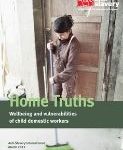
Home Truths: wellbeing and vulnerabilities of child domestic workers
Based on interviews with around 3,000 children the report is a study into the psychosocial wellbeing of child domestic workers across six countries in three continents (Peru, Costa Rica, Togo, Tanzania, India and Philippines). This report makes an important contribution to our understanding of child domestic work and provides important indicators for the circumstances that affect these child workers as well as the aspects of their lives that contribute to their wellbeing in a positive way.
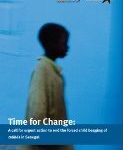
Time for Change: A call for urgent action to end the forced child begging of talibés in Senegal
Anti-Slavery International.
Available in both English and French, this short report examines the practice in daaras (Koranic schools) of sending boys as young as five years old out to beg for several hours a day. Often living far from home and in squalid conditions, talibés are frequently subjected to abuse if they fail to meet their begging quotas. The report updates the information used in Begging for Change (Anti-Slavery International, 2009) and recommends action to bring an end to this situation in Senegal.
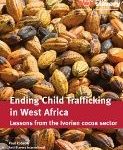
End Child Trafficking in West Africa: Lessons from the Ivorian cocoa sector
Anti-Slavery International, Paul Robson.
This report finds that trafficking of children to cocoa farms in Côte d’Ivoire still occurs. The research found significant numbers of young people in Mali and Burkina Faso who had worked as children in cocoa farms in Côte d’Ivoire in the last five years. The practices occur in the context of large-scale movements of people within the region including the trafficking of children to other agricultural activities and to other sectors.