Slavery resources

Speak out about modern slavery
We have a host of resources available for individuals, schools and faith groups
Download our free resources to help raise awareness of modern slavery in your communities
Found 47 resources matching your current query.

Contemporary Forms of Slavery in Brazil
Contemporary Forms of Slavery in Bolivia
Contemporary Forms of Slavery in Bolivia
This report provides information and analysis in relation to slavery practices in Bolivia, with a particular focus on forced labour and worst forms of child labour in the sugar, nut and mining industries and on private ranches.
Bhavna Sharma
Anti-Slavery International 2006
Contemporary Forms of Slavery in Argentina
Anti-Slavery International, Mike Kaye.
This report provides information and analysis in relation to slavery practices in Argentina, with a particular focus on trafficking of people for both labour and sexual exploitation and the commercial sexual exploitation of children. Also available as a PDF download in Spanish.
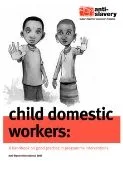
Child Domestic Workers: A handbook on good practice in programme interventions
Maggie Black, Anti-Slavery International.
A practical guide to what works and why when it comes to practical assistance for child domestic workers. Contains experiences of local practitioners from Africa, Asia, Latin America and the Caribbean; international organisations and networks working on this issue. And the views of almost 500 current and former child domestics consulted in nine countries. A companion publication detailing the results of these consultations will follow in early 2006. Particularly useful for small and medium-sized NGOs seeking ways to improve their existing programmes or planning to add assisting child domestic workers to their activities. ISBN 0 900918 59 4
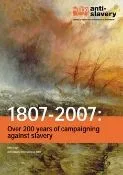
1807-2007: Over 200 years of campaigning against slavery
Anti-Slavery International, Mike Kaye.
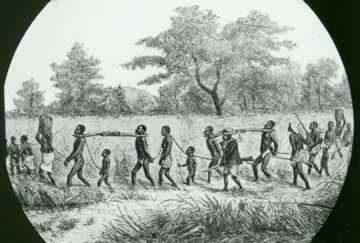
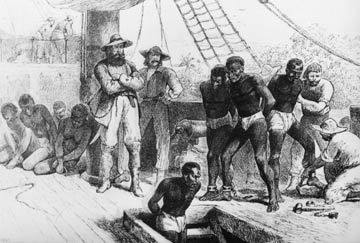
This publication gives an overview of the Transatlantic Slave Trade and considers the factors that led isolated voices of protest to develop into a popular movement in less than 20 years, helping to bring about the abolition of the slave trade in 1807. It also traces how after the end of the Transatlantic Slave Trade, new forms of slavery began to manifest themselves and how they were challenged through popular campaigns and the development of international standards to prohibit them. It also considers what action needs to be taken to free the millions of people in slavery today.
ISBN 0 900918 61 6
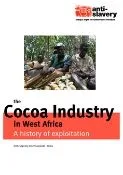
The Cocoa Industry in West Africa: A history of exploitation
Anti-Slavery International.
This report provides an in-depth analysis of how cocoa is produced and how child and slave labour enter its chain of production. It relates the history of cocoa production and explores how this commodity fits within a global market. Drawing on a wide range of sources, it concludes with recommendations for consumers, the chocolate industry and governments on actions needed to address this serious problem.
Slavery in Niger: Historical, legal and contemporary perspectives
Anti-Slavery International, Association Timidria.
Study on slavery in Niger.
Also available as a PDF download in French.
Sub-Regional Project on Eradicating Child Domestic Work and Child Trafficking in West and Central Africa: Code of Conduct English
Anti-Slavery International.
This summary from Anti-Slavery International’s French language report includes a Code of Conduct for improving the treatment of child domestic workers and child victims of trafficking, as well as recommendations for action. Anti-Slavery International set up a network of child rights organisations in six West and Central African countries: Bénin, Burkina Faso, Gabon, Ghana, Niger and Togo, in order to strengthen their ability to work together for the eradication of abusive forms of work and the worst forms of child labour.
Abolishing Slavery and its Contemporary Forms: Weissbrodt Report
Paper prepared by David Weissbrodt and Anti-Slavery International.
Office of the United Nations High Commissioner for Human Rights 2002
Ref: HR/PUB/02/4
International Action Against Child Labour: Guide to monitoring and complaints procedures
Anti-Slavery International.
Produced by Anti-Slavery International for organisations wanting to persuade governments to take action against child labour. It explains clearly how and why to use international monitoring and complaints procedures to encourage governments to respect their obligations regarding child rights. Twenty-eight pages including cover, with illustrations and case studies.