Slavery resources

Speak out about modern slavery
We have a host of resources available for individuals, schools and faith groups
Download our free resources to help raise awareness of modern slavery in your communities
Cause for concern?: London social services and child trafficking
The Cocoa Industry in West Africa: A history of exploitation
Anti-Slavery International.
This report provides an in-depth analysis of how cocoa is produced and how child and slave labour enter its chain of production. It relates the history of cocoa production and explores how this commodity fits within a global market. Drawing on a wide range of sources, it concludes with recommendations for consumers, the chocolate industry and governments on actions needed to address this serious problem.
Slavery in Niger: Historical, legal and contemporary perspectives
Anti-Slavery International, Association Timidria.
Study on slavery in Niger.
Also available as a PDF download in French.
Comments on revised draft European Convention on Action Against Trafficking in Human Beings
Amnesty International, Anti-Slavery International.
Amnesty International and Anti-Slavery International assess some of the articles in the draft of the European Convention on Action Against Trafficking in Human Beings in relation to existing international standards and commitments. In the light of this analysis and our experience of working both with and on behalf of trafficked people, we recommend ways in which the text can be amended to ensure the treaty creates a comprehensive framework that protects and respects trafficked people’s human rights.
The Migration Trafficking Nexus: Combating trafficking through the protection of migrants’ human rights
Anti-Slavery International.
Trafficking, smuggling and migration are separate, but inter-related issues. This publication seeks to look at the issue of trafficking within a broader migration framework and to propose policies which would be effective in reducing trafficking and in preventing the human and labour rights violations to which migrant workers are so often subjected today. Also available in Spanish and Khmer. ISBN 0 900918 58 6
NGOs’ Statement on Protection Measures for Trafficked Persons in Western Europe
NGOs from five Western European countries — Germany (KOK) , Greece (STOP NOW), Italy (On the Road), The Netherlands (STV) and United Kingdom (Eaves Housing for Women and Anti-Slavery International) — presented this joint statement on protection measures for trafficked people at the OSCE Human Dimension Implementation Meeting in Warsaw in October 2003.
Stresses the need for appropriate measures for the identification of trafficked people to prevent their immediate deportation, need of right to a reflection delay, temporary or permanent residency status for trafficked people and need for means to ensure that the residency status allows the trafficked person full social inclusion.
Programme Consultation Meeting on the Protection of Domestic Workers Against the Threat of Forced Labour and Trafficking: Discussion paper
Anti-Slavery International.
Paper prepared for Anti-Slavery International by Lin Chew, in co-operation with the International Labour Organization’s Special Action Programme to Combat Forced Labour.
Sub-Regional Project on Eradicating Child Domestic Work and Child Trafficking in West and Central Africa: Code of Conduct English
Anti-Slavery International.
This summary from Anti-Slavery International’s French language report includes a Code of Conduct for improving the treatment of child domestic workers and child victims of trafficking, as well as recommendations for action. Anti-Slavery International set up a network of child rights organisations in six West and Central African countries: Bénin, Burkina Faso, Gabon, Ghana, Niger and Togo, in order to strengthen their ability to work together for the eradication of abusive forms of work and the worst forms of child labour.
Combatting Trafficking in Persons: A directory of organisations
CHANGE Anti-Trafficking Programme.
Information of activities and services offered by organisations around the world that are working towards the elimination of human trafficking. It aims to facilitate co-operation and the establishment of networks and partnerships, aid effective referral for trafficked people (psychological counselling, long-term shelter provision and skills training), assist personnel who have identified a victim of trafficking to make contact with relevant service providers and provide an overview of the trafficking situation in each country. Also provides background on legislation and the types of services provided by organisations and institutions in this area. ISBN 0 907236 35 9
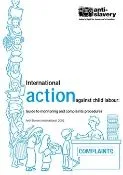
International Action Against Child Labour: Guide to monitoring and complaints procedures
Anti-Slavery International.
Produced by Anti-Slavery International for organisations wanting to persuade governments to take action against child labour. It explains clearly how and why to use international monitoring and complaints procedures to encourage governments to respect their obligations regarding child rights. Twenty-eight pages including cover, with illustrations and case studies.