Slavery resources

Speak out about modern slavery
We have a host of resources available for individuals, schools and faith groups
Download our free resources to help raise awareness of modern slavery in your communities
Abolishing Slavery and its Contemporary Forms: Weissbrodt Report
The Impact of Discrimination on Working Children and on the Phenomenon of Child Labour
NGO Group for the Convention on the Rights of the Child Sub-Group on Child Labour.
Why do children work? Most children work because their families are poor and their labour is necessary for their survival. Discrimination on grounds including gender, race or religion may also play a large part in why some children work. This six-page report investigates how discrimination works as a cause and a consequence of child labour.
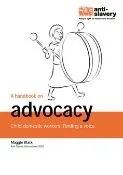
Child Domestic Workers: Finding a voice, a handbook on advocacy
Maggie Black, Anti-Slavery International.
This book draws on the experience of activists from 17 countries and representatives of internaitonal and regional agencies who attended a workshop that Anti-Slavery International convened in April 2001. A practical “how to” guide which will help local level NGOs and activists plan, design, implement and evaluate the impact of an advocacy strategy on child domestic workers. ISBN 0 900918 51 9.
Human Traffic, Human Rights: Redefining victim protection
Anti-Slavery International.
This report looks at measures to protect trafficked people in Belgium, Colombia, Italy, the Netherlands, Nigeria, Poland, Thailand, Ukraine, the UK and US. It includes case studies, documents good and bad treatment by authorities and concludes with recommendations. Download PDF versions of the complete report, individual chapters or of the executive summary, which is also available in French, Portuguese, Russian and Spanish. The complete version of the report is also available in French.
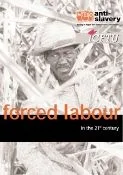
Forced Labour in the 21st Century
Anti-Slavery International, ICFTU.
This booklet highlights the main ways in which forced labour manifests itself internationally, including through slavery, bonded labour, trafficking and child labour. Case studies and pictures are provided throughout. ISBN: 0 9009 18 50 0.
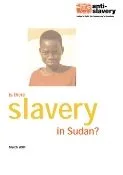
Is there Slavery in Sudan?
Anti-Slavery International.
This report summarises information obtained during a fact-finding visit to investigate abductions and slavery in Sudan. It includes illustrated case studies and the Sudan Government’s response.
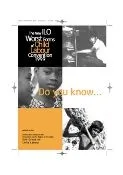
ILO Worst Forms of Child Labour Convention
2001. NGO Group for the Convention on the Rights of the Child the Sub-Group on Child Labour.
Do You Know About the ILO Worst Forms of Child Labour Convention? A 24-page brochure on how this convention creates new opportunities for civil society organisations. The brochure focuses on involvement in ratification and implementation of the Convention in an easy to read and lively format.
For a hardcopy (only available in Arabic or Spanish) please email your details, including name, organisation, and address to [email protected]
International Workshop for Practitioners on Child Domestic Work – Summary Report
Anti-Slavery International.
In April 2001, Anti-Slavery International held an international workshop for practitioners on child domestic work. This is a 10-page summary report of this meeting. The complete handbook is available above.
The Enslavement of Dalit and Indigenous Communities in India, Nepal and Pakistan Through Debt Bondage
Anti-Slavery International.
This paper, submitted to the UN Sub-Commission on Human Rights, describes the gross violation of the rights of millions of people in India, Pakistan and Nepal who are trapped in debt bondage and forced to work to repay loans. It explores evidence which shows that 80-98 per cent of bonded labourers are from communities designated as dalits.
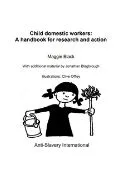
Child Domestic Workers: research and action handbook
Anti-Slavery International.
This practical “how to” guide draws on the experiences and views of non-governmental organisations and others working with child domestics in Asia, Africa and Latin America, offering useful insights for anyone who wants to help the children concerned. ISBN 0 9009 18 41 1