Slavery resources

Speak out about modern slavery
We have a host of resources available for individuals, schools and faith groups
Download our free resources to help raise awareness of modern slavery in your communities
Behind Closed Doors: child and early marriage as slavery
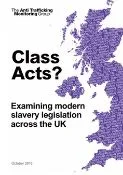
Class Acts? Examining modern slavery legislation across the UK
Anti-Trafficking Monitoring Group.
The report analyses anti-slavery legislation across the UK and highlights significant differences in a number of key areas across the three jurisdictions. In particular the research emphasises how the Modern Slavery Act falls behind the legislation in Scotland and Northern Ireland on victim protection measures. It also points out that there is no monitoring framework in place to oversee the implementation of all three Acts across the UK, including data collection and analysis. As with all of the Group’s reports, the research makes recommendations as to improvements in the UK’s anti-trafficking policy and practice.
Submission on bonded labour, trafficking and domestic work in India
UN’s Universal Periodic Review submission on bonded labour, trafficking and domestic work in India, 2016. The submission by Anti-Slavery International, Jan Jagriti Jendra, The National Domestic Workers’ Movement, and Volunteers for Social Justice.
2016 Submission on bonded labour, trafficking and domestic work in India
Anti-Slavery International, Jan Jagriti Jendra, The National Domestic Workers’ Movement, and Volunteers for Social Justice.
This submission to the Universal Periodic Review of India, focuses on slavery practices in India. These include bonded labour, which occurs across a variety of sectors; trafficking in persons within Indian borders; and the widespread abuse and exploitation of women working as domestic workers, including trafficking of children for domestic servitude. The submission also focuses on cases of trafficking and forced labour of workers migrating internationally. It is based on information gathered through a number of different projects in India by the above named organisations.
2016 Submission on bonded labour, trafficking and domestic work in India:
Submission on Trafficking in Persons Bill
India: Submission on the Trafficking of Persons (Prevention, Protection and Rehabilitation) Bill 2016
Anti-Slavery International 2016
Download the report:
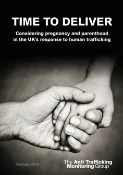
Time to deliver: considering pregnancy and parenthood in the UK’s response to human trafficking
Anti-Trafficking Monitoring Group.
This report analyses how the victims of trafficking who are pregnant or have children are ‘systematically overlooked’ in the UK’s anti-trafficking response. It identifies that support to meet this group’s special needs, such as access to safe and appropriate accommodation, childcare, access to specialist healthcare and support for their children, is not systematically provided. Despite pregnancy and parenthood having an often profound impact on the physical and psychological well-being of trafficking victims, the government’s response to trafficking fails to recognise these individuals as being particularly vulnerable.
Enforcing Mauritania’s Anti-Slavery Legislation: The Continued Failure of the Justice System to Prevent, Protect and Punish
Anti-Slavery International, Minority Rights Group International (MRG), Society for Threatened Peoples (STP) and the Unrepresented Nations and Peoples Organization (UNPO)
Outlines the systematic failures of Mauritania’s justice system to provide redress to slavery victims.
ATMG’s submission to the independent review of the Overseas Domestic Workers’ visa
In March 2015 the Minister for Modern Slavery, Karen Bradley, tasked James Ewins QC to undertake an independent review of the Overseas Domestic Worker (ODW) visa. The review includes consideration of:
- Whether the arrangements for issuing ODW Visas are effective in protecting potential victims from abuse
- Whether there is any evidence that the terms of the Visa, including the link to the specified employer, have led to the trafficking or slavery of domestic workers
- Whether the policies or processes for (i) identifying and (ii) providing support to victims of modern slavery amongst those who entered the country on an ODW visa are effective
- Whether the policies and processes for pursuing those accused of perpetrating modern slavery offences against those on an Overseas Domestic Workers Visa are effective
- The need to maintain the integrity of the immigration system.
Submission on the implementation of the EU Trafficking Directive by the UK Government
The UK Government has recently released the report on the implementation of the European Union Trafficking Directive (EU/2011/36) by the UK. The Anti-Trafficking Monitoring Group, which was set up to monitor the implementation of the Directive as well as the Council of Europe Convention on Trafficking in Human Beings, has been critical of the Government’s findings.