Slavery resources

Speak out about modern slavery
We have a host of resources available for individuals, schools and faith groups
Download our free resources to help raise awareness of modern slavery in your communities
In the Dock: Examining the UK’s Criminal Justice Response to Trafficking
Home Truths: wellbeing and vulnerabilities of child domestic workers
Based on interviews with around 3,000 children the report is a study into the psychosocial wellbeing of child domestic workers across six countries in three continents (Peru, Costa Rica, Togo, Tanzania, India and Philippines). This report makes an important contribution to our understanding of child domestic work and provides important indicators for the circumstances that affect these child workers as well as the aspects of their lives that contribute to their wellbeing in a positive way.
WAHAYA: Domestic and sexual slavery in Niger
Anti-Slavery International, Galy Kadir Abdelkader, Moussa Zangaou.
This report focuses on the ‘wahaya’ practice in Niger, whereby girls and women of ‘slave caste’ are bought and sold as unofficial wives. They are referred to as ‘fifth wives’, as they are additional to the four wives permitted to Niger, but they are not officially married to their master and therefore have none of the legal rights and protection to which legal wives would have recourse. ‘Wahaya’ are essentially slaves used for domestic labour and sexual gratification.
The report presents testimonies from individual wahaya to expose the shocking realities of the practice and calls for efforts to end these forced unions.
Slavery on the high street. Forced labour in the manufacture of garments for international brands.
Anti-Slavery International.
New report from Anti-Slavery International exposes how top UK high street brands are selling clothing made by girls in slavery in southern India. Our research has uncovered the routine use of forced labour of girls and young women in the spinning mills and garment factories of five Indian clothing manufacturers that supply major western clothing retail brands.
All Change: Preventing trafficking in the UK
Anti-Trafficking Monitoring Group.
The new report from The Anti-Trafficking Monitoring Group is the result of research carried out between 2010 and 2011 with the aim of examining trafficking prevention in the UK in accordance with the Government’s obligations under the Council of Europe Convention on Action against Trafficking in Human Beings. In particular, it assesses measures instigated by the UK Government to prevent trafficking/re-trafficking, highlights good practice in prevention programming and offers recommendations to strengthen the UK’s ability to prevent trafficking in the future.
Sarah Edwards (with contribution from Rachel Annison).
Time for Change: A call for urgent action to end the forced child begging of talibés in Senegal
Anti-Slavery International.
Available in both English and French, this short report examines the practice in daaras (Koranic schools) of sending boys as young as five years old out to beg for several hours a day. Often living far from home and in squalid conditions, talibés are frequently subjected to abuse if they fail to meet their begging quotas. The report updates the information used in Begging for Change (Anti-Slavery International, 2009) and recommends action to bring an end to this situation in Senegal.
Mauritania Land Report: Programme de prevention et de resolution des conflicts fonciers intercommunautaires en Mauritanie
Anti-Slavery International.
Traditionnellement, les mauritaniens d’ascendance esclave (principalement les Haratines) ont été privés du droit de posséder des terres ; un grand nombre de Haratines continue à travailler les terres des clans de leurs anciens maîtres. Pendant les années 80, les réformes aux lois foncières furent introduites envisageant l’appropriation et la redistribution des terres par l’Etat, en vue de permettre aux Haratines de réclamer les droits sur les terres qu’ils cultivaient. Toutefois, à cause de l’application incomplète et biaisée des réformes, les terres affectées par l’Etat appartenaient surtout aux communautés ordinaires, et celles-ci furent redistribuées aux élites beidanes. Ensuite, après les expulsions de 1989, les terres des négro-mauritaniens forcés à quitter le pays furent souvent accordées aux Haratines.
Aujourd’hui, alors qu’un nombre croissant de personnes d’ascendance esclave cherche à posséder des terres, et alors que les réfugiés négro-mauritaniens retournent pour réclamer leurs propriétés foncières, les droits à la terre sont plus conflictuels que jamais. Ce rapport analyse l’échec des réformes foncières, les divers types de conflits fonciers qui existent, et les mesures qui pourraient prévenir et résoudre de tels conflits.

‘Never Work Alone’: Trade Unions and NGOs joining forces to combat Forced Labour and Trafficking in Europe
‘Never Work Alone’ is a guide for trade unions and other civil society organisations to jointly combat modern-day slavery and trafficking of workers. The report is the result of a two-year project in which trade unions and NGOs have looked into each other’s actions and approaches to combat slavery and labour trafficking. It examines different approaches and shows four major common grounds for action, each of them documented with a series of best practices.
End Child Trafficking in West Africa: Lessons from the Ivorian cocoa sector
Anti-Slavery International, Paul Robson.
This report finds that trafficking of children to cocoa farms in Côte d’Ivoire still occurs. The research found significant numbers of young people in Mali and Burkina Faso who had worked as children in cocoa farms in Côte d’Ivoire in the last five years. The practices occur in the context of large-scale movements of people within the region including the trafficking of children to other agricultural activities and to other sectors.
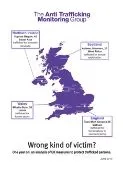
Wrong kind of victim?: one year on: an analysis of UK measures to protect trafficked persons
Anti-Trafficking Monitoring Group; Lorena Arocha; Mike Dottridge
This report by the Anti-Trafficking Monitoring Group looks at the government’s flagship ‘National Referral Mechanism’ and concludes that the UK’s new anti-trafficking measures are “not fit for purpose” and the Government is breaching its obligations under the European Convention against Trafficking. It also finds that the current system places too much emphasis on the immigration status of trafficked people rather than focusing on protecting the victims of this traumatic crime. The report also includes recommendations for the Government to reform the system.